Exotic Car Detailing in Las Vegas: Soft Supercar Paint, Correction-First, and the PPF + Ceramic Stack
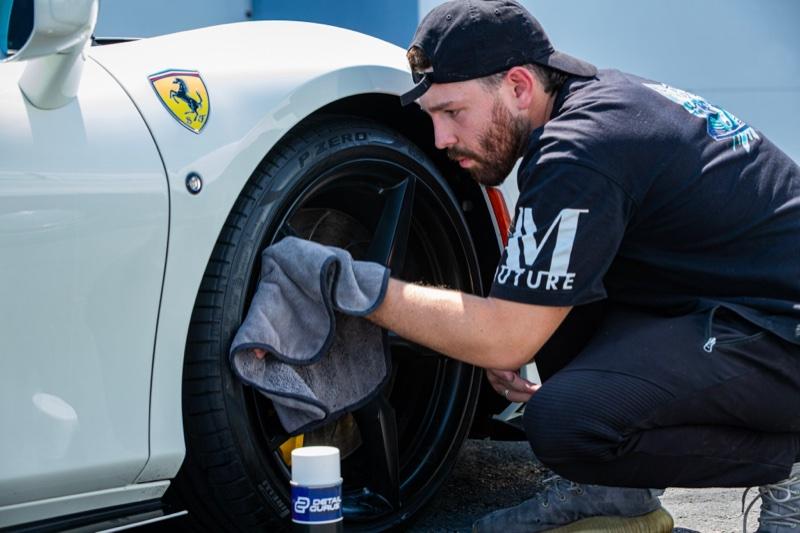
Exotic car detailing in Las Vegas is really a paint-protection problem: most six-figure cars need correction-first paint work plus the PPF + ceramic stack ($1,199–$1,999 coating, $1,700–$8,000+ film by coverage), not a one-time wash. The clearcoats are often soft, and the environment — valet stack-ups on the Strip, freeway gravel, and desert dust that lands on a parked car within days — is brutal on a finish you can't easily replace. Here's how we approach a Ferrari, Lamborghini, McLaren, Porsche, Rolls, or a high-end Mercedes/BMW: correction-first, the stack matched to how you actually drive, a written itemized quote on every car, and the whole thing done in your own garage.
Quick answer: what an exotic actually needs
Most exotics don't need a one-time wash — they need a protection plan. The short version: correct the paint first so you're not sealing in swirls, put PPF on the impact zones that take rock chips, and put ceramic over the whole car for gloss, UV defense, and easy desert-dust washes. We quote it itemized in writing, and we come to your garage so the car never leaves your sight.
Why exotic and supercar paint is its own category
Two facts drive everything in this post. First, a lot of exotic paint is soft. Ferrari, Lamborghini, and McLaren clearcoats — and many low-volume factory specialty colors — are thinner or softer than a mass-market clearcoat, and some are effectively hand-finished. They mar from a single dusty wipe that a Porsche or a German sedan would shrug off. Second, the cost of getting it wrong is enormous: a respray on an exotic panel can run into five figures and tank originality on a collectible.
Las Vegas multiplies the risk. Desert dust is mineral-heavy and slightly abrasive, and it settles on every parked car constantly. Dust on soft paint plus one impatient microfiber wipe equals swirls. Stack on a UV index that sits at 10–11 for five months a year and surface temps north of 150°F on a black hood at 2pm, and you've got a finish that degrades faster here than in any coastal market — on cars where the finish is most of the value.
Why correction-first matters more on a six-figure car
A ceramic coating or PPF locks in whatever is underneath it for years. Skip the correction step and you've permanently sealed swirl marks, wash marring, and water spots under the protection — on a car where every defect shows under light because the paint is dark, deep, or both. On soft exotic clearcoat that already marks easily, that's a season's worth of damage frozen in place.
This is the single biggest reason a too-cheap exotic coating quote exists: the shop is skipping correction to hit a number. Correction is the most labor-intensive part of the job — often 60–80% of the total hours — so cutting it saves a fortune in time and saddles you with the consequence. On a supercar with limited clearcoat thickness to begin with, we also take paint depth measurements before we touch a polisher, so we never thin a delicate clearcoat below safe levels. The full method is in our paint correction guide.
The protection stack: PPF + ceramic, matched to how you drive
There's no single right answer — there's a right answer for your car and your driving. Here's how the options map to real use cases:
| Setup | Roughly | Best for |
|---|---|---|
| Ceramic only (3/5/10-yr Blask) | $1,199 / $1,499 / $1,999 | Garage-kept, low-mileage cars where gloss, UV defense, and easy washes matter more than chip protection |
| Front-end PPF + full ceramic | ~$1,700–$2,500 film + $1,199–$1,999 coating | The default exotic stack — protects the impact zone, coats the whole car including over the film |
| Track package PPF + ceramic | ~$2,500–$4,500 film + coating | Cars that see canyon runs, track days, or heavy freeway miles and need wider front + rocker coverage |
| Full-body PPF + ceramic | ~$5,000–$8,000+ film + coating | Long-term keepers, collectibles, and rare finishes where resale and a flawless surface justify full coverage |
The reason the stack works is that PPF and ceramic do different jobs. Film is a physical, self-healing layer that stops rock chips, valet rubs, and bug etching — ceramic does not stop chips. Ceramic is a hard, slick, UV-stable layer that makes dust and water sheet off and keeps gloss up between details. Putting ceramic over the film gives you a uniform, easy-clean finish across paint and film both. Full film pricing by coverage is in the PPF cost guide.
An honest note on when full-body PPF is overkill
I'll talk owners out of full-body PPF more often than into it. If your exotic is a garage queen that sees the occasional Sunday cruise and never touches the I-15, wrapping the entire car in film at $5,000–$8,000+ is spending a lot to protect panels that statistically never get hit. Front-end PPF on the hood, bumper, mirrors, and fender leading edges covers where chips actually land, and ceramic handles the rest for a fraction of the cost.
Full-body earns its keep when the car is genuinely driven — freeway commuting, road trips with Vegas-to-California gravel, or track use — or when it's a collectible where originality and a perfect surface drive resale. If that's not you, I'd rather save you four grand than sell you film you won't benefit from. (The same logic on coating value lives in our breakdown of soft-paint coating economics, which applies cleanly to exotics.)
How much does exotic car detailing cost in Las Vegas?
Straight detailing on an exotic uses the same packages as anything else — most owners step up to the $499 Premium or $899 Elite tier for the deeper interior and paint work — but the real spend is protection. Standalone paint correction runs $349 (single-stage), $699 (two-stage), and $1,199–$1,899 (three-stage / heavily marked or exotic paint). Ceramic coating is $1,199 / $1,499 / $1,999 for the 3-, 5-, and 10-year Blask tiers with correction included. PPF runs from roughly $1,700–$2,500 for front-end coverage up to $8,000+ for full-body, by coverage and panel complexity.
Discretion: we come to your garage
Aqualine Performance is mobile and based in Henderson — we come to you Valley-wide, and for exotic owners that's usually the whole point. The car never leaves your sight, there's no transporter, no loaner-lot exposure, and no parade of strangers near a car people recognize. Wash, interior, and maintenance work happens right in your driveway.
Correction and coating are different: they're staged indoors in your own garage and scheduled around the 65–80°F application window, because soft paint can't be safely polished at 150°F and a ceramic coating embeds desert dust permanently if it cures in open air. A clean, shaded garage is the ideal controlled space, and most exotic owners already have one — so we bring the controlled conditions to you instead of the other way around.
A realistic maintenance rhythm for a coated exotic
Protection isn't set-and-forget. To keep soft paint swirl-free under the coating:
- Rinse desert dust off before any mitt touches the panel — dust is the abrasive, the wash is just the trigger.
- Two-bucket hand wash or touchless only — never a brush-style automatic wash on soft exotic paint, coated or not.
- Maintenance detail every 2–3 weeks if it's driven, less if it's stored; a coated car washes dramatically faster because everything sheets off.
- Keep it garaged when you can — UV is the slow killer, and a covered car ages far slower even with ceramic on it.
- Re-inspect the PPF edges and high-touch panels annually so a lifting edge or a tired section gets caught early.
Related reading
Go deeper on the pieces: our paint correction guide explains why correction-first protects delicate clearcoat, PPF cost in Las Vegas breaks down film pricing by coverage, and our soft-paint coating breakdown covers the coating economics that apply to exotics too. For the full menu of film and coating options, see our paint protection page.
Protect your exotic the right way
Ferrari, Lamborghini, McLaren, Porsche, Rolls, or a high-end Mercedes/BMW — we correct soft paint, build the PPF + ceramic stack to how you drive, and quote it itemized in writing. Mobile, discreet, Las Vegas Valley-wide.
Book an Exotic DetailQuick Answers
Exotic car detailing in Las Vegas starts at our $499 Premium and $899 Elite detail packages, but most six-figure cars are really buying protection: standalone paint correction runs $349 to $1,899 by stage, ceramic coating runs $1,199 (3-year), $1,499 (5-year), or $1,999 (10-year) with correction included, and PPF runs from roughly $1,700–$2,500 for front-end coverage up to $8,000+ for a full body wrap. Every exotic gets a written, itemized quote before any work starts — no surprise pricing on a car this valuable.
Yes. Many exotics — Ferrari, Lamborghini, McLaren, and a lot of factory specialty finishes — wear softer, thinner, or hand-applied clearcoats that mar far more easily than a mass-market German sedan. Soft clearcoat picks up swirls from a single careless wipe, which is exactly why correction-first prep and careful hand washing matter more on a supercar than on almost anything else in Las Vegas, where desert dust settles on parked paint within days.
On a Las Vegas exotic the ideal setup is both: paint protection film on the impact zones to stop rock chips, plus a ceramic coating over the whole car (film included) for gloss, UV defense, and easy dust washes. If the budget only covers one, road-tripping and frequently driven supercars should prioritize front-end PPF ($1,700–$2,500) because ceramic does not stop chips, while a garage-kept, rarely-driven collector car gets strong daily value from a full ceramic ($1,199–$1,999).
Yes. Aqualine Performance is mobile and based in Henderson — we come to you across the Las Vegas Valley and work out of your own garage or driveway, which most exotic owners prefer for discretion and because the car never leaves their sight. Wash, interior, and maintenance work happen on-site; correction and coating work is staged indoors in your garage and scheduled around the 65–80°F application window so the finish cures clean.
Full-body PPF is worth it on a Las Vegas supercar when the car is driven on the freeway regularly, gets tracked, or is a long-term keeper where resale and a flawless finish justify the $5,000–$8,000+ spend. For a garage queen that mostly sees weekend cruises, full coverage is usually overkill — front-end PPF ($1,700–$2,500) on the hood, bumper, mirrors, and fender leading edges stops the chips that actually happen, and ceramic handles the rest for far less money.
Founder & Lead Detailer, Aqualine Performance. Pacific F2000 driver and track instructor at Dream Racing (Las Vegas Motor Speedway).
Keep reading
Mobile Detailing vs Shop Detailing in Las Vegas: Honest Trade-Offs
Mobile detailing is convenient. It's also limited by physics — water access, power, dust, and 110-degree heat. Here's what we can and can't do on-site in Las Vegas.
Car Detailing Prices in Las Vegas: What You'll Actually Pay (2026)
Every detailing quote in the Valley lands somewhere between $150 and $1,000 — and the difference is rarely explained. Here's exactly what each price tier buys, with our real package prices published.
Paint Correction Cost in Las Vegas: 2026 Pricing by Stage
Correction quotes in the Valley run from $349 to nearly $2,000, and the spread is almost entirely labor hours. Here's what each stage costs, what it fixes, and when the cheaper stage is genuinely the right call.