Is PPF Worth It in Las Vegas? The Honest Rock-Chip Math
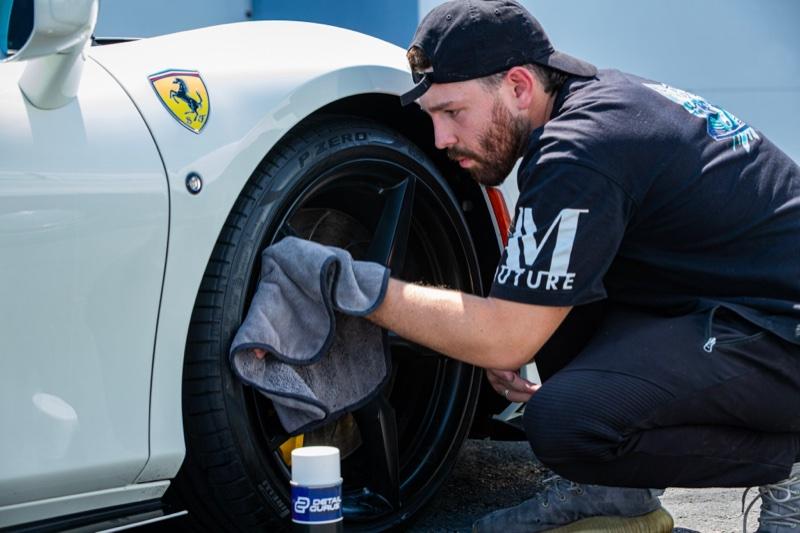
Honest answer up front: PPF is worth it in Las Vegas if you commute the freeways or keep the car three years or more — and usually not worth it if you don't. A full front end runs $1,700–$2,500 once; repainting a single chipped panel runs $1,500–$3,000+ and never quite matches the factory. I install film for a living, so audit my math below — including the four situations where I tell people to keep their money and buy a coating or a detail instead.
What does PPF actually do?
Paint protection film (also called clear bra) is a thick, optically clear urethane layer applied over your paint. Definition done — here's what that buys: it physically absorbs the impact of rock chips, gravel, and road rash before any of it reaches your clearcoat. Premium films are also self-healing — light scratches and wash swirls disappear with heat from the sun or warm water — and they shrug off bug acid, bird droppings, and the fine desert dust that scratches unprotected paint.
What it doesn't do: PPF isn't a coating substitute for gloss and slickness across the whole car, and on its own it doesn't add the deep hydrophobic beading people want. That's why film and ceramic are a pairing, not a competition — more on that below.
Why the Las Vegas freeways make the case
Three Valley realities do the persuading for me. First, the freeways: I-15, US-95, and the 215 are in near-permanent construction, and the loose gravel and base rock they kick up turns your commute into a sandblasting run at 70+ mph. The front three feet of every daily driver here takes the damage. Second, desert grit: wind-blown sand and construction dust ride the wind across the whole Valley, peppering hoods and bumpers even off the freeway. Third, soft factory paint: a lot of modern paint — Teslas and several other brands — marks and chips easily, and once the clearcoat is breached the chip starts to rust and spread under the desert sun.
The real math: PPF vs. repainting a panel
The number that makes PPF worth it isn't the film cost in isolation — it's the film cost against what fixing the damage costs. A single chip-riddled hood or bumper isn't a touch-up; it's a respray, and a respray on a metallic or pearl finish is a color-match gamble that an appraiser and any sharp buyer will spot.
| Coverage level | Las Vegas cost | What it protects | Who it's for |
|---|---|---|---|
| Partial front | $900 – $1,500 | Front bumper, 18–24" hood strip, fender tips, mirror caps | Lighter-mileage drivers, leases worth protecting, budget-conscious daily drivers |
| Full front end | $1,700 – $2,500 | Full hood, full fenders, bumper, mirrors, headlights — the freeway sandblast zone | Freeway commuters keeping the car 3+ years — the sweet spot |
| Full body | up to $8,000+ | Every painted panel; price scales with body complexity | Exotics, collector cars, and anyone protecting a high resale value top to bottom |
| A single panel respray | $1,500 – $3,000+ | Fixes damage after the fact — never matches factory paint perfectly | Nobody wants this — it's the bill PPF exists to prevent |
Run the comparison for a typical commuter: a $1,700–$2,500 full front end is roughly the cost of repainting one panel — and it protects the whole front of the car for 7–10 years against the chips that would have caused several of those resprays. The first time it stops a chip that would've meant a hood respray, it's paid for itself.
PPF vs. ceramic vs. both
These solve different problems, and the most common mistake I see is people thinking a coating will stop chips. It won't.
| PPF | Ceramic coating | |
|---|---|---|
| Stops rock chips | Yes — physically absorbs impact | No |
| Self-heals light scratches | Yes (premium film) | No |
| UV / oxidation protection | Yes | Yes |
| Hydrophobic, easier washing | Mild | Strong |
| Typical Las Vegas cost | $900–$8,000 by coverage | $1,199–$1,999 by warranty tier |
| Lifespan | 7–10 years | 3–10 years by tier |
The setup most Las Vegas daily drivers land on: full front-end PPF on the impact zones, ceramic coating over the whole car — including over the film — for UV, hydrophobics, and wash-day sanity. The full breakdown is in Ceramic Coating vs. PPF in Las Vegas, and the exact film price ranges by coverage live in the PPF cost guide. If you drive a Tesla, the soft-paint angle is covered in the Tesla coating guide.
Self-healing film and the warranty
Premium PPF is self-healing: minor scratches and swirl marks pull themselves flat when the film warms up, which in Las Vegas happens just by parking in the sun. That matters here because the same dust that scratches bare paint is constantly landing on the car — on film, those marks vanish instead of accumulating.
Quality film also carries a 10-year manufacturer warranty against yellowing, cracking, and delamination, and realistically lasts 7–10 years in the desert if it's washed properly. This is where bargain installs burn people: cheap film yellows under the Valley's roughly 294 sunny days a year (National Weather Service Las Vegas climate normals) in 2–3 years, and a yellowed front clip looks worse than the chips you were trying to prevent. Saving $500 on film is the most expensive corner you can cut in this climate.
Resale math: what PPF actually preserves
Buyers don't pay extra for the words "PPF installed" — they pay for what the film preserved: an original, un-resprayed front end with no rock-chip pitting. In the Las Vegas used market, where sandblasted hoods and pitted bumpers are normal, an original front clip that still looks factory lists higher and sells faster. And when you sell, the film peels off cleanly to reveal paint that's spent its whole life protected — or you leave it on as a selling point. Either way, you've avoided the resale ding that a visible respray or a chipped front end carries.
When PPF is NOT worth it
- You lease or flip the car every 1–2 years — you're buying chip protection for the next owner; a ceramic coating or a $299 detail covers your window better
- It's a low-mileage garage queen that rarely sees a freeway — without the commute, the rock-chip risk that justifies film mostly isn't there
- You're prepping the car for sale — film won't return its cost at resale; spend on a correction and detail that make it photograph well instead
- The paint is already failing or chipped to the clearcoat — film locks in damage; fix the body work first, then protect fresh paint
If you decide it's worth it
Real coverage levels and prices are in the PPF cost guide — partial front $900–$1,500, full front end $1,700–$2,500, full body up to $8,000+, every quote written and itemized. If you're still deciding between film and coating, start with Ceramic Coating vs. PPF. And the full menu lives on the paint protection page, where you can see how PPF and ceramic stack together.
Related reading
Pricing the film by coverage: the PPF cost in Las Vegas guide. Choosing between film and coating: Ceramic Coating vs. PPF. Driving a Tesla with soft factory paint: Tesla ceramic coating in Las Vegas. Or see everything together on the paint protection page.
Want the honest answer for your specific car?
Tell us the car, how long you're keeping it, and how much freeway you drive. If PPF doesn't pencil out, we'll say so and point you to the cheaper option that fits. We come to you, anywhere in the Las Vegas Valley.
Get an Honest RecommendationQuick Answers
PPF is worth it in Las Vegas if you commute the freeways or plan to keep the car three years or more. The Valley is one of the highest rock-chip environments in the country — I-15, US-95, and the 215 are lined with construction gravel and desert grit that sandblast the front of your car at 70 mph. A $1,700–$2,500 full front end is cheap insurance against a $1,500–$3,000+ respray that also tanks your resale value. If you lease, flip cars every year or two, or the car lives in a garage and rarely sees a freeway, partial front coverage or skipping film entirely is the smarter money.
PPF physically stops rock chips and road rash; ceramic coating doesn't. Paint protection film is a thick, self-healing urethane layer that absorbs the impact of gravel and debris before it reaches your paint — it's the only product that prevents chips. Ceramic coating is chemical protection: UV resistance, hydrophobics, and easier washing, but a rock at freeway speed goes straight through it into the clearcoat. In Las Vegas the strongest setup is PPF on the front-end impact zones with ceramic coating over everything, including on top of the film.
PPF in Las Vegas runs $900–$1,500 for a partial front, $1,700–$2,500 for a full front end, and up to $8,000+ for full-body coverage in 2026. Repainting a single chipped panel like a hood or bumper runs $1,500–$3,000+ at a quality body shop, and a repaint never matches factory paint perfectly — which a buyer or appraiser notices. For a freeway commuter, the full front end usually pays for itself the first time it stops a chip that would otherwise have meant a respray.
Quality PPF self-heals light scratches and swirl marks with heat — the surface marring vanishes in the sun or after warm water, which matters in Las Vegas where dust acts like fine sandpaper on every careless wipe. Premium film carries a 10-year manufacturer warranty against yellowing, cracking, and delamination, and realistically lasts 7–10 years here if it's washed properly. Bargain film is the trap: cheap film yellows under desert UV in 2–3 years, which is the most expensive way to save $500.
PPF is not worth it in Las Vegas if you lease or sell the car within a year or two, if it's a low-mileage garage queen that rarely touches a freeway, if you're prepping the car for sale, or if the paint is already failing and needs body work first. In those cases the film is protecting paint for the next owner or wrapping a problem you should fix instead. A $190–$499 detail or a ceramic coating usually fits those situations better than $900–$2,500 of film.
Founder & Lead Detailer, Aqualine Performance. Pacific F2000 driver and track instructor at Dream Racing (Las Vegas Motor Speedway).
Keep reading
Dealership PPF vs Aftermarket PPF in Las Vegas: Should You Take the $2,400 Package?
"The dealer wants $2,400 for their paint protection package — should I just add it to the loan?" It's the most common PPF question I get, and the honest answer isn't automatic. Sometimes the dealer package is a genuinely good buy; more often you're paying full-front money for partial-front coverage in bulk-cut film. Here's the real trade-off — film spec, coverage measured in panels, who honors the warranty in year four, and the narrow case where taking the dealer deal is the smart move.
PPF Cost in Las Vegas: What Paint Protection Film Really Costs (2026)
PPF quotes in Las Vegas range from $900 to over $8,000 — and coverage level explains most of it. Here's the 2026 price breakdown by package, plus the questions that expose a corner-cutting installer.
Paint Protection Film Cost in Las Vegas by Neighborhood: Spring Valley, North Las Vegas & Beyond
PPF in Las Vegas runs $900 for a partial front end to $8,000+ for a full-vehicle wrap — but where you drive matters as much as the car. Here's how Spring Valley, North Las Vegas, Henderson, and Summerlin commute patterns change what coverage you actually need.