In-House Wash Crew vs Outsourced Fleet Detailing in Las Vegas: Which Should Your Fleet Run?
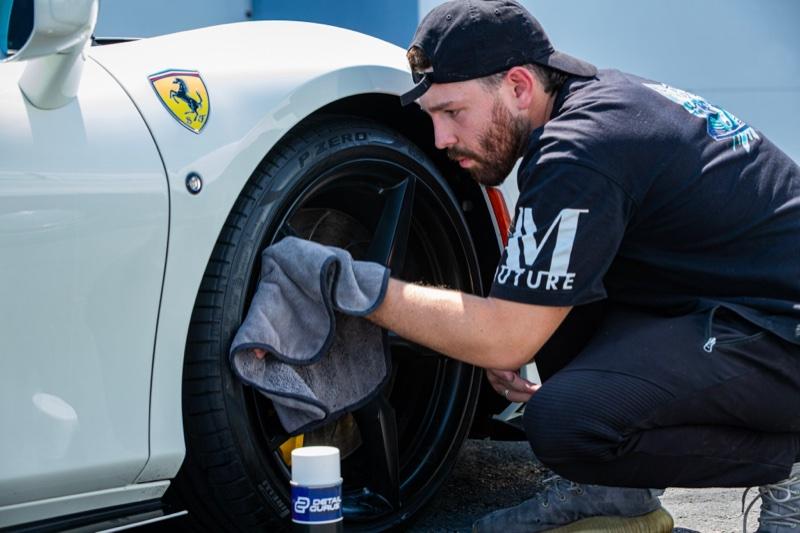
Quick answer: for most Las Vegas fleets under about 50 vehicles, an outsourced mobile program is cheaper than it looks and an in-house wash crew is more expensive than it looks. Outsourced fleet detailing runs $35–$55 per vehicle for a maintenance wash, $125–$225 for a full detail, and $349–$599 for a protection refresh, with volume pricing that drops as your unit count climbs. An in-house crew's per-vehicle number looks lower on paper — until you load in workers' comp, equipment, water-reclaim compliance, supervision, and the yard time your trucks spend parked instead of earning. In-house genuinely wins in a narrow set of cases, and I'll be straight about which ones. After running fleet programs across the Valley — service vans, box trucks, rental lines, and dealer lots — here's how I'd actually make the build-versus-buy call.
The quick version
This is a build-versus-buy decision, not a price-list decision. "In-house" means you own the labor, the equipment, and the compliance; "outsourced" means you buy a finished result at a per-vehicle rate and someone else carries the overhead. The trap is comparing the wrong two numbers — an in-house hourly wage against an outsourced per-vehicle price — because the wage is only a fraction of what in-house actually costs.
For a small-to-mid fleet that's spread across job sites or routes, outsourcing almost always wins on total cost and on hassle. For a large fleet sitting at a single yard with a wash bay already built and stable crew already on payroll, in-house can pull ahead. The rest of this is how to tell which one you are.
Is an in-house wash crew actually cheaper than outsourcing?
On the surface it looks obvious: pay a washer $16–$20 an hour, buy some soap and a pressure washer, and you're washing trucks for a few dollars each. But that surface number ignores most of what it costs to run people and equipment. Here's what actually loads onto an in-house wash operation:
- Wages plus payroll burden — workers' comp on physical labor, payroll taxes, and PTO typically add 15–30% on top of the base wage before anyone touches a truck.
- Equipment and consumables — a commercial pressure washer, a water-reclaim or vacuum-recovery system ($2,000–$8,000+), buffers, extractors, pads, chemicals, and the maintenance and replacement cycle on all of it.
- Water-reclaim and stormwater compliance — containment and legal disposal so wash water doesn't hit a storm drain (more on this below); a real liability line, not a formality.
- Supervision and quality control — someone has to schedule, inspect, and correct the work, and that management time is rarely counted.
- Downtime and yard space — a vehicle being washed or waiting to be washed is a vehicle not on a route, and a wash area is yard space not doing anything else.
- Turnover — wash and detail labor turns over fast; every departure is re-hiring, re-training, and a stretch of inconsistent quality.
Add those up and the honest all-in cost of an in-house wash is usually well north of the wage-only figure managers quote themselves. An outsourced per-vehicle rate folds every one of those lines into a single number you can actually budget against — the ROI framing on that is broken down in the fleet detailing ROI guide.
In-house vs outsourced: the trade-off table
Here's the head-to-head on the dimensions a fleet manager actually weighs — not just cost, but control, compliance, and flexibility:
| Dimension | In-house wash crew | Outsourced mobile program |
|---|---|---|
| Visible per-vehicle cost | Looks low (wage + supplies only) | $35–$55 wash · $125–$225 detail · $349–$599 protection refresh |
| True cost drivers | Wages + workers' comp, equipment, reclaim, supervision, downtime, turnover | Flat per-vehicle rate; overhead is the contractor's problem |
| Water-reclaim / stormwater compliance | Your liability (Clark County / Clean Water Act) | Carried on the rig; legal disposal included |
| Yard space & downtime | Trucks and crew tie up yard and bays | We come to you, off-hours; trucks stay on route |
| Consistency | Swings with crew turnover and training | Trained crew, same standard every cycle |
| Scale up or down | Fixed headcount; flexing means hiring/firing | A schedule change — add or cut vehicles per cycle |
| Best fit | Large single-yard fleet, existing bay, stable labor | Small-to-mid, multi-site, or route-based fleets |
Notice the pattern: in-house converts a variable cost into a big pile of fixed costs. That's only a good trade when you have enough vehicles at one location to spread those fixed costs thin. Below that threshold, you're paying for capacity and compliance you barely use.
What does it actually cost per vehicle at 5, 15, and 50 units?
Fleet pricing isn't one number — it scales with volume, because a fixed route of many vehicles is far more efficient to service than a handful of one-offs. Here's roughly how outsourced per-vehicle pricing moves as the fleet grows:
- 1.5 vehicles — you sit near the top of each range ($50–$55 a wash, $200–$225 a detail). Small accounts carry more per-vehicle setup and travel, so the rate reflects it, but you still skip every dollar of in-house overhead.
- 2.15 vehicles — you move toward the middle of the ranges and onto a fixed recurring route (say $40–$48 a wash). This is the sweet spot where outsourcing beats in-house cleanly for almost everyone: enough volume for good pricing, not enough to justify building a wash operation.
- 3.50-plus vehicles — you earn the lowest per-vehicle rate ($35–$40 a wash) and a locked route schedule. This is also the size where an in-house crew first becomes worth modeling — if, and only if, the fleet sits at one yard with a bay already built.
The tier logic is the same one that drives standalone fleet washing pricing — I lay out the wash, detail, and protection-refresh brackets in detail in fleet washing cost in Las Vegas. The point here is the comparison: whatever the per-vehicle number is, it's the whole number, with no reclaim system, no workers' comp, and no idle labor hiding behind it.
The Las Vegas factors that change the math
This decision plays out differently in the desert than it would in a mild coastal city, and three local realities push the numbers around.
First, water and reclaim compliance. Clark County stormwater rules and the federal Clean Water Act don't let soapy wash water carrying oil, brake dust, and road grime run into a storm drain. An in-house on-site wash needs containment mats, a reclaim or vacuum-recovery system, and legal disposal — and in a drought-restricted market where the Southern Nevada Water Authority actively polices water use, the scrutiny is real. A compliant mobile contractor carries all of that on the rig, moving both the equipment cost and the liability off your books.
Second, dust and debris. Las Vegas fleets don't get a little dirty — they get coated. Construction along I-15, US-95, and US-215 throws grit and aggregate onto every vehicle that runs those corridors, and desert dust settles on anything parked in a yard. That drives wash frequency up, which is exactly the recurring-labor burden that makes an in-house crew expensive and a scheduled route efficient.
Third, UV and heat on your branding. Roughly 294 sunny days a year and summer surface temperatures past 130°F oxidize unprotected paint and fade vinyl wraps within 3–4 years — and a faded, chalky work truck with a peeling logo is rolling advertising working against you. This is where the protection refresh ($349–$599) earns its keep, and it's skilled work an entry-level in-house washer usually can't do. Lake Mead hard water and sprinkler overspray add mineral spotting on top of the dust, so a plain rinse in the yard often just moves the problem around instead of solving it.
When does keeping it in-house actually win?
I'd rather tell a fleet manager to keep it in-house than sell a program that doesn't fit — losing a bad-fit account is cheaper than servicing one badly. Here's the honest list of when in-house is the right call:
- You run a large single-yard fleet — roughly 50-plus vehicles at one location. Only at that scale do the fixed costs of a bay, a reclaim system, and a dedicated crew spread thin enough per vehicle to beat a per-vehicle rate.
- You already have a permitted wash bay with reclaim built and paid for. If the compliance and equipment cost is already sunk and legal, one of the biggest in-house line items is off the table.
- You have stable, low-turnover wash labor already on payroll. Consistent people you already employ remove the turnover-and-training tax that usually eats in-house quality.
- Your units need same-hour daily turnaround. Rental returns, shuttle vans, or delivery vehicles that must be spotless before every shift benefit from a crew standing by — the immediacy has genuine operational value a scheduled route can't match.
- Your washing is genuinely trivial and high-volume — a quick rinse on a huge number of low-value units where a full detail is never the point.
If two or more of those describe you, model the in-house numbers seriously before you outsource. If none of them do — and for most service, contractor, and sales fleets spread across the Valley, none do — the mobile program is the cheaper, lower-hassle answer even before you count the compliance headache you get to skip.
The hybrid most fleets actually land on
The real-world answer often isn't all-or-nothing. Plenty of fleets keep a quick in-house rinse for daily cosmetic touch-ups and outsource the work that needs skill, equipment, or compliance — the periodic full details, the paint-protection refreshes, and anything involving reclaimed water. You get the immediacy of a crew for the trivial stuff and a trained mobile team for the work that actually protects the asset and your resale value.
That split tends to be the lowest-total-cost setup for a mid-size fleet: you're not paying a contractor to rinse dust off daily, and you're not asking a $17-an-hour washer to safely run a compound-and-protect cycle on a branded wrap. Match the task to the right resource instead of forcing the whole program into one bucket.
So which should your fleet run?
If you run a small-to-mid fleet — say 5 to 40 vehicles — or your units are spread across job sites and routes, outsource it. The per-vehicle rate ($35–$55 a wash, $125–$225 a detail, $349–$599 for a protection refresh) beats the true all-in cost of building a compliant in-house operation, and you skip the workers' comp, the reclaim system, and the turnover entirely. If you run a large single-yard fleet with a bay already built and stable crew already employed, model in-house seriously — that's the case where the fixed costs finally pencil out.
Either way, make the comparison on the honest number, not the wage. In-house isn't cheap because a washer is cheap; it's cheap only when you have enough vehicles at one place to bury the overhead. Full commercial fleet program structures, industries served, and scheduling are on the commercial fleet detailing page.
Related reading
The per-vehicle wash, detail, and protection-refresh brackets and how volume pricing scales by fleet size: fleet washing cost in Las Vegas. The longer-run ROI math — what regular fleet detailing nets back through resale value and delayed repaints over a service cycle: fleet detailing ROI in Las Vegas. Fleet program structures, industries served, and booking: commercial fleet detailing.
Weighing in-house against an outsourced fleet program?
Tell us your fleet size, where the vehicles sit or run, and how often they need washing. We come to you anywhere in the Las Vegas Valley, off your operating hours, and quote a per-vehicle rate against your actual unit count — so you can compare it honestly to what an in-house crew really costs. If keeping it in-house is genuinely the better call for your fleet, we'll tell you that too.
Get a Fleet Program QuoteQuick Answers
Whether it's cheaper to keep fleet washing in-house or outsource it depends on your fleet size, but for most Las Vegas fleets under about 50 vehicles, outsourcing is cheaper once you count the real costs. An in-house crew's visible cost is just wages and supplies, which looks low — but the true cost adds workers' comp, equipment, water and reclaim compliance, supervision, and the downtime your vehicles spend in the yard instead of earning. An outsourced mobile program bills a flat per-vehicle rate ($35–$55 a wash, $125–$225 a detail) with none of that overhead. Above roughly 50 single-yard units with an existing wash bay and stable labor, in-house math starts to close the gap.
Outsourced fleet detailing in Las Vegas costs $35–$55 per vehicle for a maintenance wash, $125–$225 for a full detail, and $349–$599 for a protection refresh, with volume pricing that drops as your unit count rises. A 5-vehicle account pays near the top of each range; a 15-vehicle account moves toward the middle; a 50-plus fleet earns the lowest per-vehicle rate and a fixed route schedule. Because it's mobile, there's no facility, no equipment, and no reclaim system to buy or maintain — the per-vehicle number is the whole number.
Yes — you generally need water-reclaim compliance to wash a fleet on-site in Las Vegas, and it's one of the most-overlooked costs of running in-house. Clark County stormwater rules and the Clean Water Act prohibit letting wash water carrying oil, soap, and brake dust run into storm drains, so an on-site wash operation needs containment mats, a reclaim or vacuum-recovery system, and proper disposal. In a drought-restricted desert market, water use itself is scrutinized too. A compliant mobile contractor carries reclaim on the rig and disposes of the water legally, so the liability and the equipment cost move off your books.
An in-house wash crew makes more sense than a mobile program when you run a large single-yard fleet — roughly 50-plus vehicles at one location — that already has a permitted wash bay with reclaim, stable low-turnover labor, and units needing same-hour daily turnaround, like rental returns or shuttle vans that must be spotless every morning. In that situation the fixed overhead spreads across enough vehicles to beat a per-vehicle rate, and the on-demand immediacy has real operational value. For smaller, multi-site, or route-based fleets, that overhead rarely pencils out.
Yes — a good outsourced fleet program scales up and down with your fleet size, which is one of its main advantages over an in-house crew. You can add vehicles to a route, run a heavier detail cycle before a busy season, or cut back in a slow month without hiring, firing, or carrying idle labor. An in-house crew is a fixed headcount: you pay the same wages whether the yard is full or half-empty, and flexing it means managing people, not just a schedule. Scaling on demand is a schedule change with a contractor and an HR event in-house.
Founder & Lead Detailer, Aqualine Performance. Pacific F2000 driver and track instructor at Dream Racing (Las Vegas Motor Speedway).
Keep reading
Fleet Washing Cost in Las Vegas: Per-Vehicle Pricing and What Drives the Quote
Per-vehicle fleet washing in Las Vegas runs $35 to $225 depending on service level — but desert dust, fleet size, and vehicle type all move the number. Here's exactly how the quote is built.
Fleet Detailing ROI: What Commercial Fleet Maintenance Actually Saves in Las Vegas
Fleet vehicles in Las Vegas age twice as fast as they should. Here's what neglect actually costs — and the math behind why monthly fleet detailing pays for itself.
Paint Correction vs Repainting Scratches in Las Vegas: Which Does Your Car Need?
Paint correction can improve a scratch only while the defect remains within usable clear coat. Missing color, exposed primer or metal, flaking clear, or uncertain paint thickness changes the answer to a body-shop assessment. Here is the inspection-first comparison I use before recommending a $349, $699, or $1,199–$1,899 correction tier — including the cases where I decline the detailing job.