Ceramic Coating Aftercare in Las Vegas: The Honest Maintenance Guide
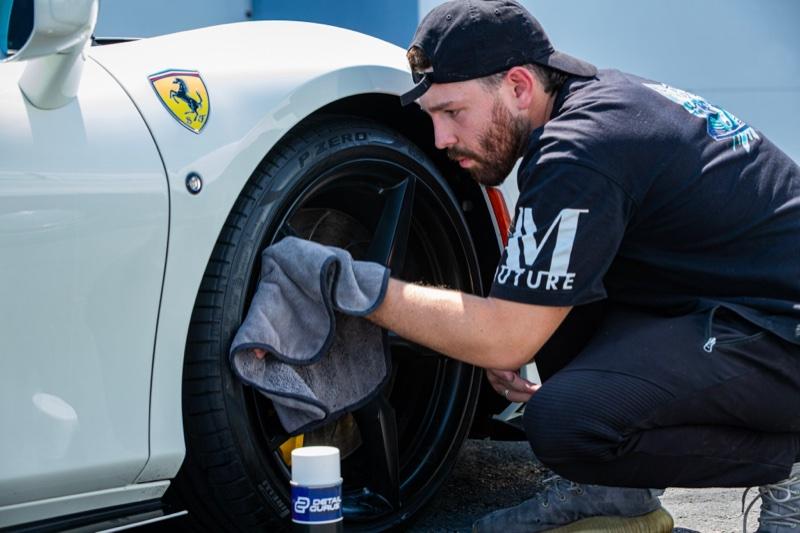
A ceramic-coated car in Las Vegas needs a pH-neutral two-bucket hand wash every two weeks, no brush tunnels, and a silica booster every 6–8 weeks — that routine is what gets a coating to its rated life. Almost every coating failure I've seen here comes down to maintenance habits, not the coating itself: a 5-year Blask hits 5 years if it's cared for, but washed at the gas station every other Saturday it gives up around month 14. Here's the aftercare routine we hand every client, condensed.
The three things actually killing coatings here
Las Vegas is brutal on paint for three specific reasons and every aftercare decision flows from these. One: UV. Our UV index hits 10+ for most of the summer, and ceramic coatings degrade under UV like everything else — slower than bare paint, but still noticeably. Two: mineral-heavy water. Sprinklers, pool overspray, and tap-water washes leave calcium and silica deposits that bond to coated paint if left to bake. Three: fine dust. Alkaline desert dust is abrasive on a micro scale; dragging a dry towel over a dusty coated panel is how swirl marks happen even on coated cars.
Wash cadence: every 2 weeks
This is the single biggest lever. Every 2 weeks, not every month. Summer dust builds up fast, and letting a coating sit with contamination for 3-4 weeks means the contaminants harden into the surface. The coating's hydrophobic layer stays effective as long as the surface is clean. Once it's coated in bonded minerals, water can't bead regardless of how good the coating is.
- Summer (May–September): every 2 weeks minimum, ideally after any dust storm or sprinkler contact
- Winter (October–April): every 3 weeks is fine; rinse after rare rain to remove road grime
- After any red-dirt off-road drive or I-15 truck spray: same-day rinse, full wash within 48 hours
The two-bucket method, done right
Use two buckets — one with soap, one with clean rinse water — plus a grit guard in each. Rinse your mitt in the clean bucket between every panel. Work top-down: roof → hood/trunk → upper doors → lower doors → bumpers. Lower panels go last because they're dirtiest. Dry with a clean microfiber drying towel immediately (don't let water air-dry in Vegas sun — the minerals will etch).
Products to actually buy
You don't need a full detailing arsenal. Three things keep a ceramic-coated car happy:
- 1.A pH-neutral ceramic-safe car shampoo — we send every client home with one
- 2.Two clean microfiber mitts (rotate them; wash separately in a fragrance-free detergent)
- 3.A silica-based spray booster or the manufacturer's maintenance spray, used every 6–8 weeks as a drying aid
That's it. Skip the "ceramic quick-coat" spray products sold at auto parts stores — they're not actually ceramic, and some of them leave a residue that dulls the real coating.
Annual maintenance appointment
For the 5-year and 10-year Blask tiers, the manufacturer warranty requires annual inspection visits. These are free, take about 30 minutes, and include a maintenance wash, a contamination check, and a refresh of the top sacrificial layer. Clients who skip these see coatings dull 1–2 years early. We track warranty schedules for you and send a reminder.
What to do if you see water spots appearing
Water spots are mineral deposits from tap water or sprinklers that have etched into the coating's top layer. Caught early (within days), they usually rinse off with a diluted vinegar wash or a dedicated water-spot remover. Left for weeks under summer sun, they bond permanently and require a light machine polish to remove, which removes a fraction of the coating. Rinsing the car after any sprinkler contact is the easiest prevention.
Related reading
This guide covers the first weeks after install — for the full year-round routine, see Ceramic Coating Maintenance in Las Vegas. To map these habits to real lifespan numbers by tier, read How Long Does Ceramic Coating Last in Las Vegas?. Full coating options are on our paint protection page.
Need a ceramic refresh?
We offer maintenance washes and annual inspections for every coating we install. Book online or call (702) 831-0641.
Book MaintenanceQuick Answers
Every 2 weeks is the sweet spot. Dust, sprinkler minerals, and UV are the three things that shorten coating life here. A bi-weekly two-bucket hand wash keeps the coating's hydrophobic layer working and prevents mineral etching. Don't let a coating go longer than 3 weeks without a rinse in the summer.
No. Use a pH-neutral ceramic-safe shampoo. Any shampoo with wax, silicone, or gloss enhancers will bond to the top of the coating and dull the look. Read the label — if it says "wax-enhanced," skip it. We hand clients one when we deliver the car.
For the 5- and 10-year coatings, yes. A 15-minute annual maintenance wash and refresh spray keeps the hydrophobic performance where it should be and protects the manufacturer warranty. For the 3-year tier, it's optional but extends the life noticeably.
Technically yes, but avoid it. Tunnel washes typically apply a polymer sealant or hot wax at the end, which bonds over the coating and dulls it. If you must, ask for "wash only, no wax" — some shops honor it, many don't. Touchless washes are a safer fallback than brush tunnels.
Founder & Lead Detailer, Aqualine Performance. Pacific F2000 driver and track instructor at Dream Racing (Las Vegas Motor Speedway).
Keep reading
Dealership Ceramic Coating vs Independent Detailer: Is the Add-On Worth It?
Half the dealer ceramic coatings I inspect aren't real ceramic coatings. Here's what's actually being applied at the F&I desk and how to know what you bought.
Is Ceramic Coating Worth It in Las Vegas? The Honest Math
We sell ceramic coatings, so take this with that grain of salt — then look at the math anyway. Five-year cost vs wax, what the desert actually does to unprotected paint, and the four cases where we tell people not to buy one.
How Long Does Ceramic Coating Last in Las Vegas? Real Lifespan vs. Marketed Claims
Ceramic coating companies market 3, 5, and 10-year products. Here's what those numbers mean against 294 days of UV, Lake Mead hard water, and desert dust that re-deposits daily.